Thermal Vacuum Testing for ESA Gain Drift
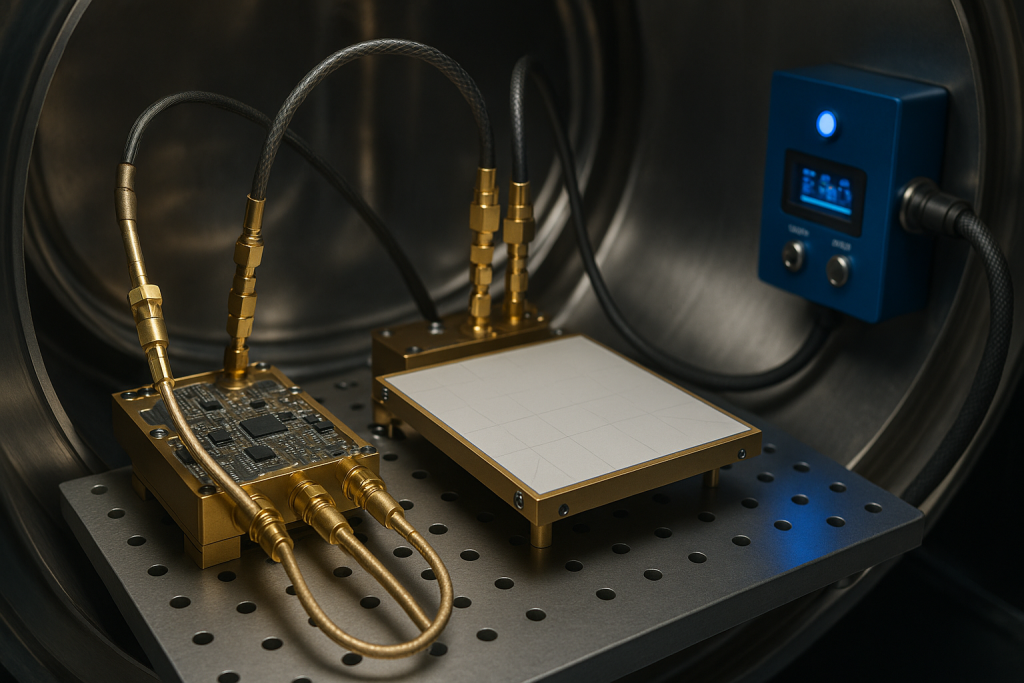
TVAC testing is where Ka-band electronically steered antennas (ESAs) stop being a neat RF design and start behaving like a real LEO terminal: thermally strained, power-cycled, phase-noisy, and operating without convective cooling. If you are verifying a user terminal, the uncomfortable truth is that most gain drift and beam focus drift only show themselves once […]
Phase shifter quantisation limits Ka band sidelobes

Abstract: Ka sidelobes are often blamed on array geometry or tapering, but in LEO user terminals the quiet culprit is phase shifter quantisation. This article links phase-bit resolution to sidelobe growth, scan-dependent artefacts, and compliance risk, then lays out practical mitigation paths—from mixed-resolution architectures and calibration to tapering choices that actually survive hardware constraints. Ka […]
Validating Ku-band Scan Loss on Moving Platforms

For aeronautical LEO terminals, Ku scan loss is the quiet performance killer: the link budget looks healthy at boresight, then evaporates when you demand ±60° steering while the aircraft is pitching, rolling, and flying through a radome that was never RF-invisible. Validating that loss—properly, repeatably, and in conditions that resemble flight—is what separates a datasheet […]
Radome wetting effects on Ka-band ESAs (and what maritime LEO terminals can do about it)

Ka-band electronically steered arrays (ESAs) have become the workhorse antenna technology for LEO user terminals—especially on maritime mobility platforms where fast satellite tracking, low profile, and no moving parts are major advantages. But ships add a harsh, uniquely RF-hostile layer to the equation: persistent moisture, sea spray, salt contamination, and rapid weather transitions. One of […]
Reducing Ka-band Link Budget Loss in Rain Conditions
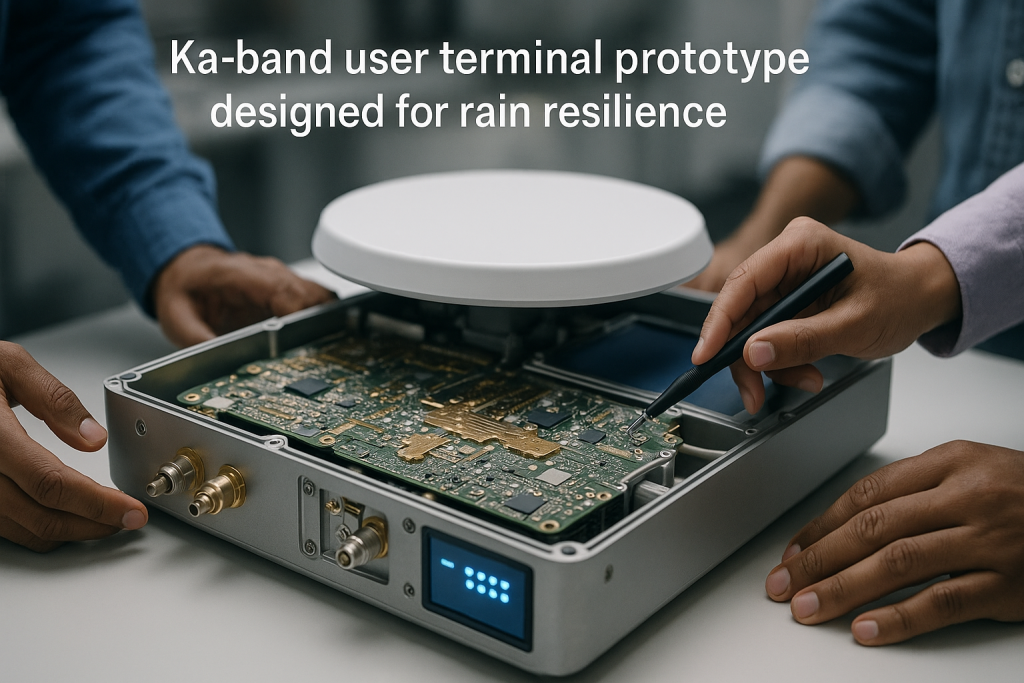
Designing a Ka-band link budget that holds up in real rain, not just clear-sky spreadsheets, is one of the defining challenges for LEO user terminals and gateways. At 20/30 GHz, a few kilometres of intense rainfall can dominate your fade margin, while LEO geometry (rapidly changing elevation angles, frequent handovers, short fade events) makes “static […]
Ka-band array calibration under mobility thermal drift (for LEO user terminals)
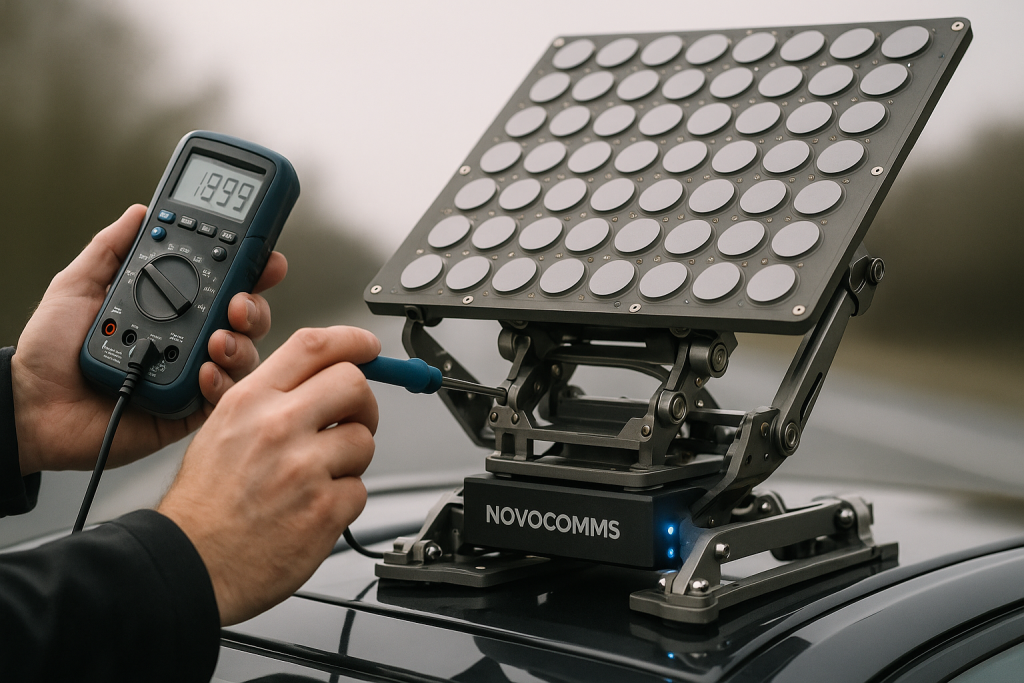
Electronically steered Ka-band user terminals live or die by array calibration. On a bench, it’s straightforward to align channels, flatten phase shifter states, and hit EIRP/G/T targets. On a moving platform—vehicle roof, maritime, aero—the same terminal sees continuous attitude changes, vibration, airflow-driven temperature gradients, and PA self-heating. Those effects translate into time-varying phase/gain errors that […]
Ka-band Array Calibration under Mobility Thermal Drift
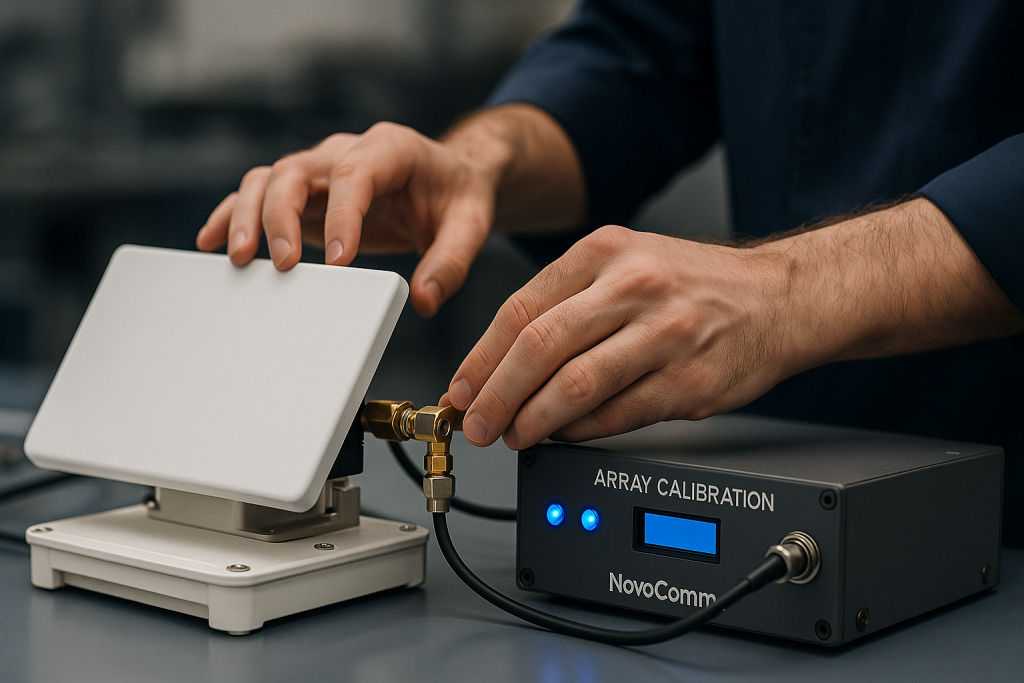
On-the-move Ka-band user terminals live or die by array calibration. Not because calibration is “nice to have”, but because mobility creates the worst possible combination of fast-changing pointing, wide bandwidth, and temperature swing. When the RF front-end warms under sun load, cools in airflow, or self-heats under high duty-cycle uplink, the phase and gain of […]
Ka-band Link Budget Enhancements for LEO Satellites
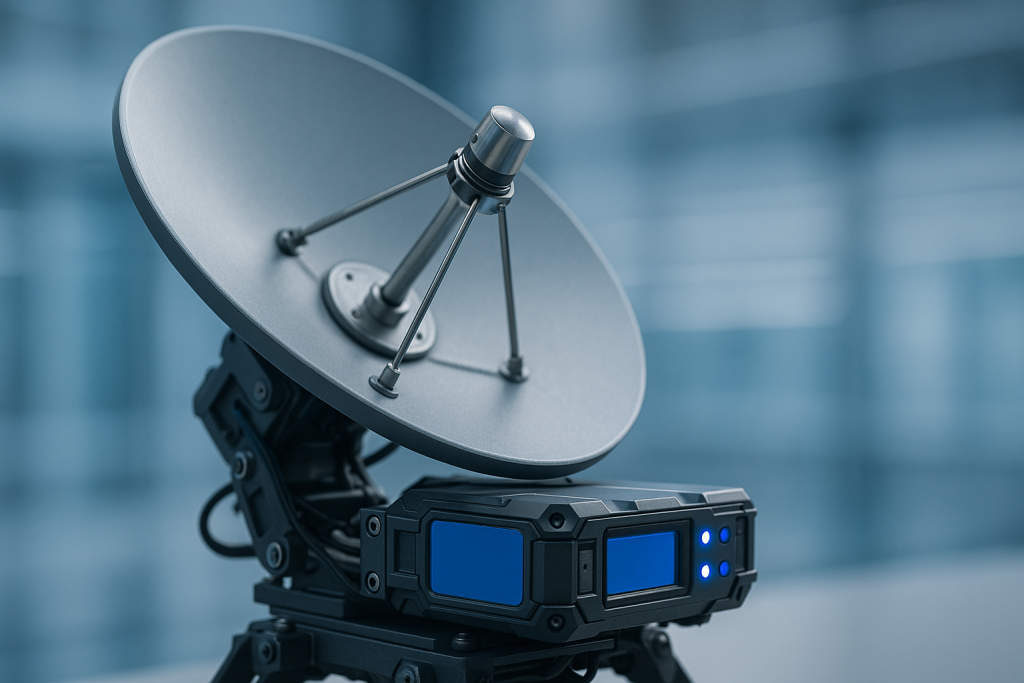
In today’s fast-evolving landscape of satellite communications, the significance of the Ka-band link budget cannot be overstated. As low Earth orbit (LEO) satellites proliferate, enhancing link budgets becomes a critical focal point for engineers and RF architects. These enhancements directly correlate with improved performance metrics, including throughput, latency, and connectivity reliability in mobile and remote […]
Ku-band Link Budget Optimization for Harsh Terrain

In the realm of satellite communications, optimizing the Ku-band link budget is paramount, especially when operating in harsh terrain. These scenarios pose unique challenges that demand precise engineering and strategic planning to ensure reliable connectivity. Poor link performance caused by environmental variables, particularly in remote or rugged locations, can disrupt critical communications, resulting in inefficiencies […]
Optimizing LEO Satellite Link Budget for Rain Conditions

As Low Earth Orbit (LEO) satellite systems continue to gain traction in communications, the optimization of LEO satellite link budgets becomes critical, particularly when accounting for adverse weather conditions like rain. Rain can significantly degrade the quality of satellite signals, leading to increased bit error rates and potential communication outages. Effectively managing the LEO satellite […]