Advanced Ku-band Solutions for LEO Satellites

As the demand for reliable satellite communications escalates, the focus on advanced Ku-band solutions for LEO (Low Earth Orbit) satellites becomes critical. These solutions are not merely technological advancements; they represent a significant turn in how we approach global connectivity through satellite systems, particularly in an era where real-time data transfer and low latency are […]
Designing Efficient L-band Satellite Antennas

In the ever-evolving landscape of satellite communication, the design of efficient L-band antennas has become crucial. Operating between 1 to 2 GHz, these antennas are pivotal for various applications, including mobile platforms and global positioning systems. However, achieving optimal performance through L-band antenna design requires a blend of technical precision and efficient use of materials. […]
Optimizing Ku-band Frequencies for LEO Connections
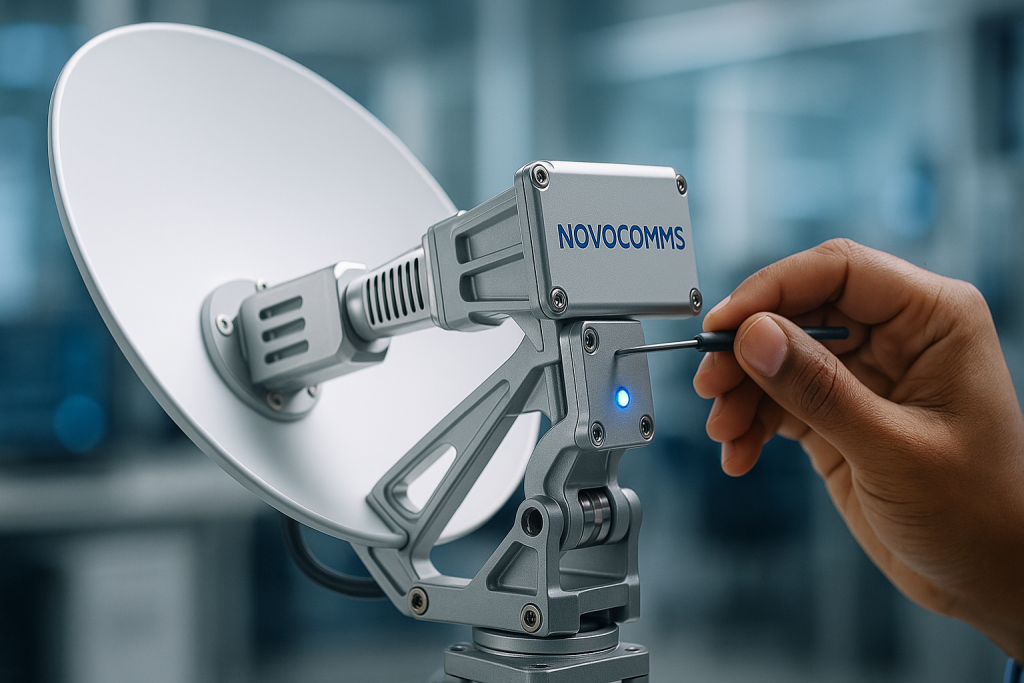
As the demand for reliable satellite connectivity soars, particularly for low Earth orbit (LEO) satellites, the role of Ku-band frequencies has become increasingly prominent. Operating between 12-18 GHz, these frequencies strike a balance between coverage and capacity, making them ideal for numerous applications including broadband internet services and broadcasting. At Novocomms Space, we specialize in […]
Advancements in Ku-band Terminal Efficiency

In the ever-evolving landscape of satellite communications, efficiency is paramount. The introduction of advancements in Ku-band terminal efficiency is changing the narrative for RF architects, developers, and end-users alike. Ku-band terminals are increasingly becoming the backbone of high-speed satellite communication systems, with applications spanning commercial and defense sectors. At Novocomms, we are committed to providing […]
Optimising Ku-band Link Budget for LEO Satellites

The satellite communications landscape is evolving rapidly, particularly with the rise of Low Earth Orbit (LEO) satellites. As demand for broadband connectivity accelerates, optimising the Ku-band link budget becomes crucial for ensuring reliable, high-quality connections. In this blog post, we’ll delve into what a Ku-band link budget entails, why it’s important for LEO satellites, and […]
SATCOM in the New Space Era: Optimizing Antenna Performance for LEO and GEO Connectivity

The global satellite communications landscape is undergoing a seismic transformation. Traditional Geostationary Earth Orbit (GEO) networks—long the backbone of SATCOM—are now being complemented by rapidly expanding Low Earth Orbit (LEO) constellations from both commercial and government operators. For defence, aerospace, maritime, and emergency response sectors, this “New Space” environment promises lower latency, higher bandwidth, and […]
Ensuring Mission Continuity: Advanced Beamforming Techniques for Seamless SATCOM Connectivity

In mission-critical operations—whether on land, at sea, or in the air—continuous, secure, and high-throughput connectivity is not a luxury; it’s a lifeline. From real-time command-and-control in military engagements to live data transmission from airborne ISR (Intelligence, Surveillance, Reconnaissance) platforms, the quality of the satellite link can mean the difference between operational success and failure. Beamforming […]
Compact is Critical: Why Size Matters for Military and Aerospace SATCOM Applications

In SATCOM On-the-Move (SOTM), performance has traditionally come at a cost—both in physical size and operational efficiency. Large, power-hungry satellite terminals have long been accepted as a necessary compromise for maintaining reliable, high-bandwidth connectivity in motion. But for military, aerospace, and other mission-critical mobile applications, that compromise is no longer acceptable. Today’s operational environments demand […]
Optimizing Ku-band Frequency for Satellite Links

In the rapidly evolving world of satellite communications, optimizing frequency bands is crucial for delivering reliable, high-performance links. One of the most widely used bands is the Ku-band, sitting between 12 GHz to 18 GHz. It’s a sweet spot for many SATCOM applications, balancing atmospheric penetration with antenna size and power efficiency. But as demand […]
Ku-Band Terminal Design for LEO Satellites: Enabling the Next Frontier of Secure Connectivity

In the race to deliver ubiquitous, low-latency connectivity, LEO satellite constellations have emerged as a transformative force. But as these networks take flight, a critical challenge remains: designing high-performance ground terminals that can keep pace with the speed and agility of LEO orbits. At the heart of this challenge lies Ku-band terminal design—a complex interplay […]